
Steam System Optimization & Verified Savings
Freight Rail Yard · New Brunswick, Canada · 24/7 Operations
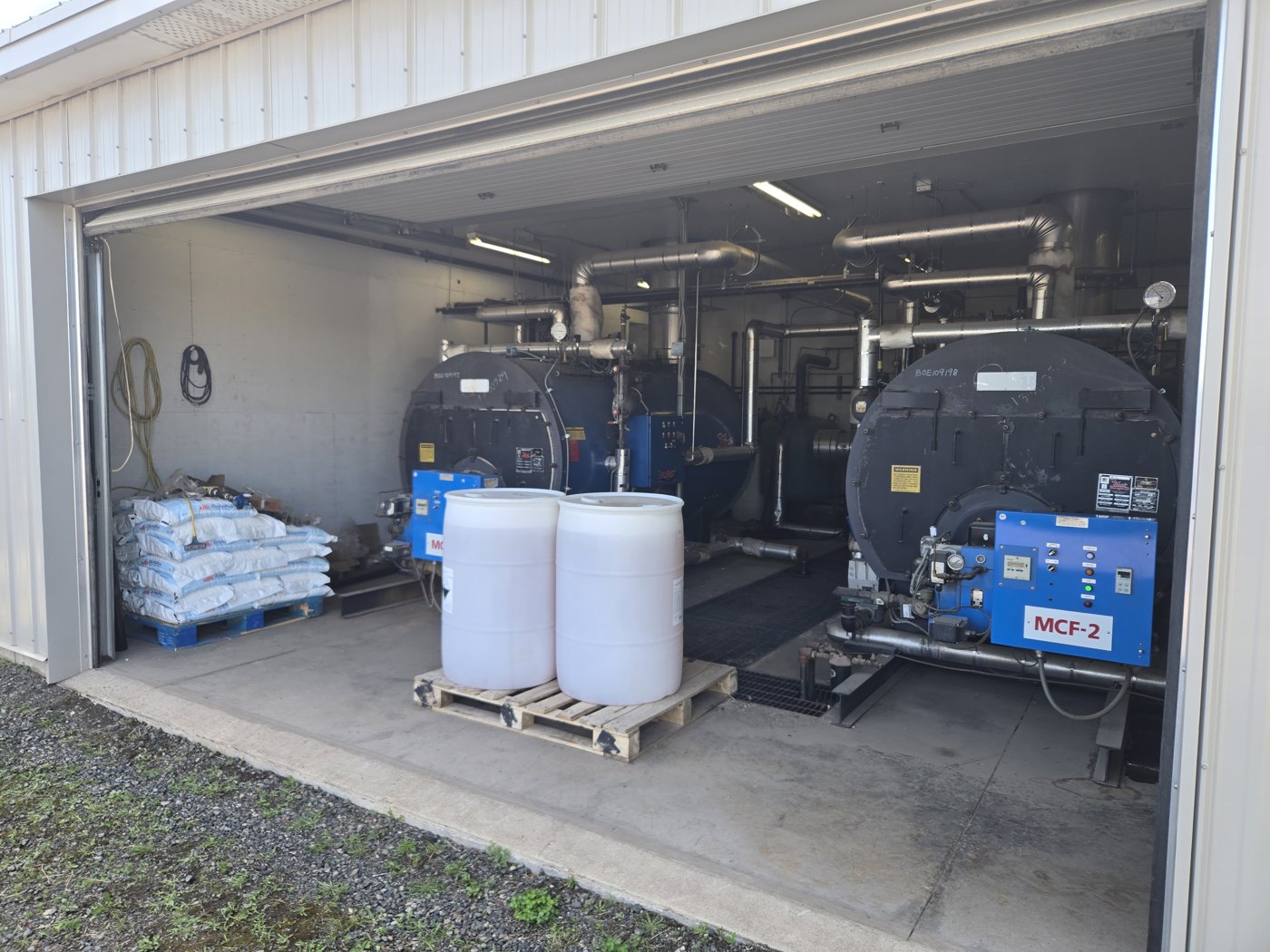
This New Brunswick railyard relies on two large steam boilers to heat railcars ahead of product transfer. A remote bill review identified abnormally high consumption, which triggered an onsite audit by Panevo. This audit found the system operating far below its potential: poor underground insulation and drainage meant that steam was boiling groundwater rather than heating railcars, with less than half of all natural gas burned actually reaching its end use. Other significant losses were identified around failed steam traps and uninsulated outdoor pipework.
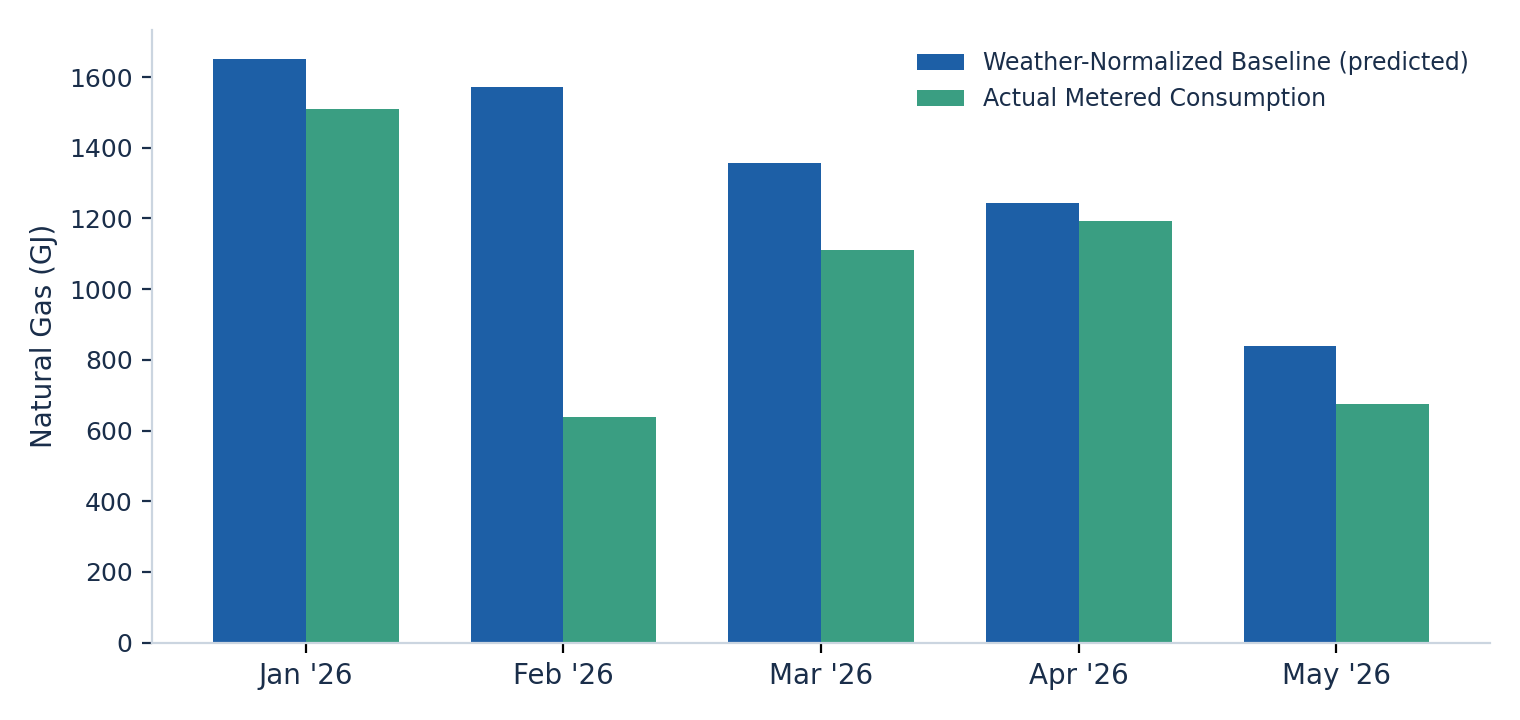
Verified, not estimated: A weather-normalized regression baseline (adj. R² = 0.77) isolates true savings from winter severity. Five months of metered data already exceed the audit's projected 20% reduction target.
Above & below-grade line insulation and replacement: Replaced waterlogged insulation on the main underground steam and condensate line between the boiler room and the tank car siding, and insulated all accessible above-ground bare pipe, eliminating the largest source of unaccounted heat loss.
Excavation and drainage works: Tied the underground pipe raceway into a nearby manhole so precipitation can no longer pool against the piping. This immediately allowed proper drainage and stopped unnecessary boiling of groundwater or precipitation.
Steam trap replacement: Replaced failed and failing traps, including at the deaerator heat exchanger, closing a chronic, hard-to-see leak path.
Real-time gas sub-metering: Installed a dedicated gas meter with a cellular data connection and instrumentation panel for live consumption alerting, closing the months-long detection gap that had let an earlier consumption spike go unnoticed until the next utility bill.
Metering-enabled opportunity identification: This same metering has already surfaced a new opportunity: testing reduced steam pressure during the low-demand periods that make up most operating hours, something that can now be validated with real meter data instead of estimates.
IPMVP Option C M&V: Built a weather-normalized natural gas regression model to isolate and verify true savings independent of winter severity.
Live, 24/7 railyard operations: All work was sequenced around active tank car heating and rail traffic, with no interruption to product delivery schedules.
Hard-to-quantify underground losses: Heat loss from pipework intermittently submerged in water couldn't be modeled with standard formulas; Panevo bounded the estimate with two independent methods, and metered M&V has since confirmed actual savings exceeded even the higher-loss estimate.
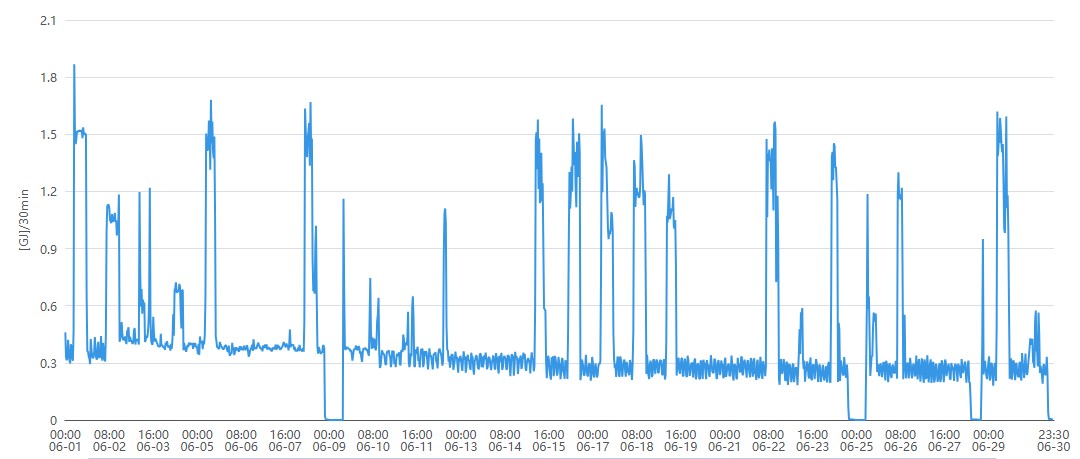
High-resolution metering: The new meter logs consumption at 30-minute intervals, capturing load swings the original monthly bill-only analysis could never see, and giving the team the resolution needed to test the steam pressure opportunity above.